
The Complete Beginners Guide to Formula 1

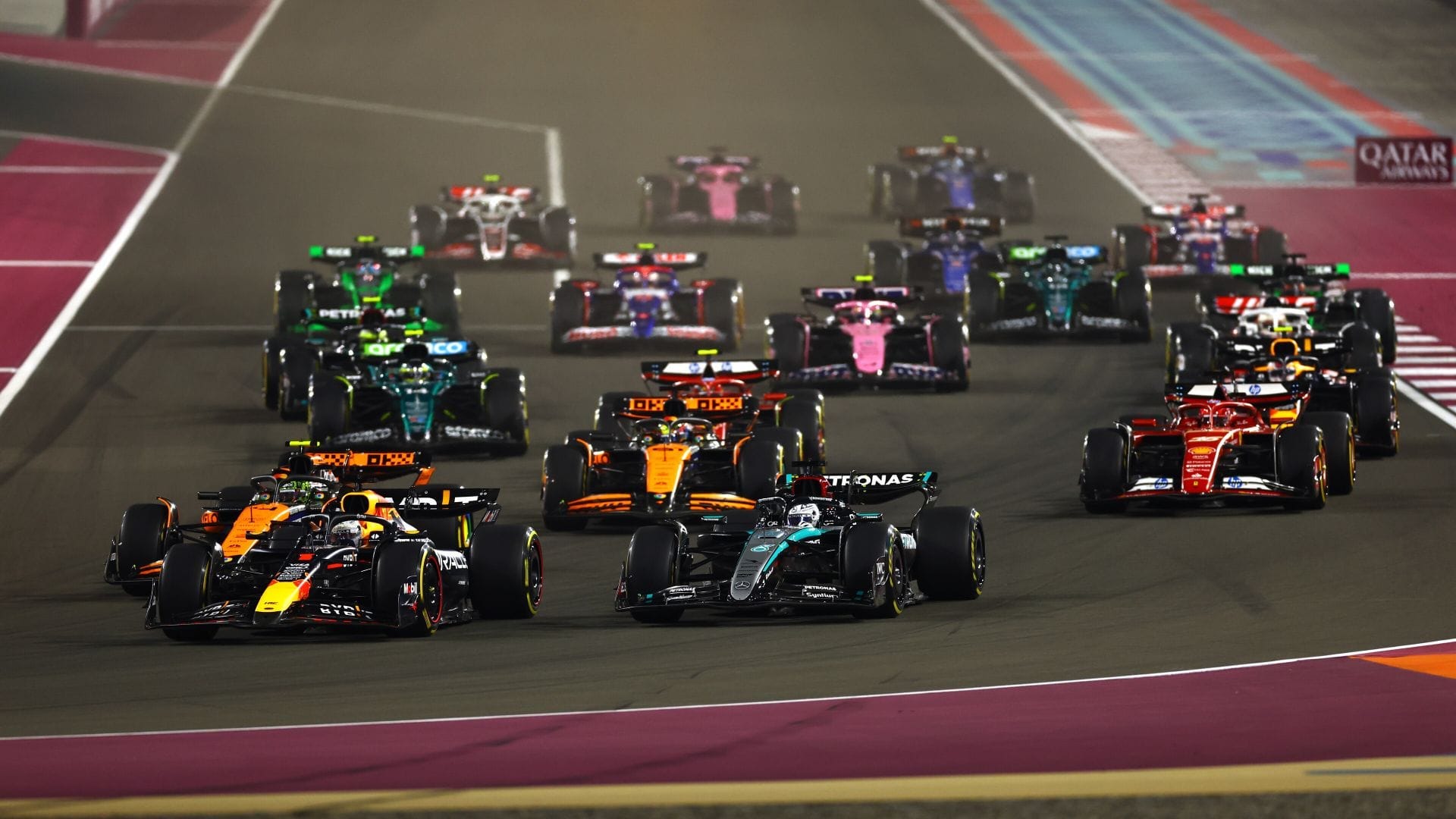
Are you new to the thrilling world of Formula 1 but don’t know where to start? Look no further! Our “Beginners Guide to Formula 1” is here to help you dive into the exhilarating world of high-speed racing, cutting-edge technology, and fierce competition. This guide will provide you with the essential knowledge to understand and appreciate the sport, from its rich history to the current teams and drivers.
In this guide, we’ll take you on a journey through the key aspects of Formula 1, including:
The history and evolution of the sport
The teams, drivers, and personalities that make F1 so compelling
The technology behind the incredible machines that race at breakneck speeds
The races, circuits, and iconic moments that have defined the sport
The rules, regulations, and strategies that shape the competition
The fan experience and how to get the most out of following Formula 1
Here is our Beginners Guide to Formula 1 in 2026!
Formula 1 Explained - What is Formula One?
Formula One (F1) is a series of races held at different venues around the world, of the fastest open-wheel, open-cabin, single-seated, four-wheeled autos in the world. There have been a few years when even six-wheeled cars participated in F1.
The word ‘Formula’, included in the name, refers to a set of rules that the constructors of the car, its mechanics and the drivers have to strictly follow during the tenure that they are members of F1.
When motor racing first began, there were no limitations on the power or the size of the cars. The races became unequal with cars with more power and bigger sizes easily outpacing the smaller cars. The races also created dangerous situations in which many participants got seriously hurt, some even fatally.
When racing resumed after World War II, the governing body of the sport, the FIA, introduced a set of rules that set limits on the size and the power of the cars. This created an even playing field for the participants and drivers, while more stress was laid on the efficiency and design of the cars and also the capability of the drivers.
The word ‘One’ comes from the grading FIA issues to the racing tracks, the approved cars and the drivers’ licences. The ‘One’ is also to distinguish F1 from street car racing and also to indicate that it is the ultimate in formula racing.
Formula One is governed by the Federation Internationale de l’Automobile (FIA) owned by the Formula One Group. The FIA, established on 20 June 1904, is a non-profit organisation and represents the interests of motoring organisations and motor car users.
The organisation amends, alters and introduces rules to Formula One so as to ensure the safety of the participants in the races, promote fair play, and ensure that the followers and spectators of Formula One get a good deal.
The History of Formula One
Formula One originated with the European Championship of Grand Prix races. Though several Grand Prix organisations agreed to the ‘formula’ or a set of rules before World War II, races were suspended during the war.
Formula One, a new set of rules, was agreed upon by the racing organisations in 1946. The first non-championship race was the Turin Grand Prix held the same year in Italy. The following year, the World Drivers’ Championship was formalised. Achille Varzi, an Italian driver, won the race in an Alfa Romeo.
The first world championship race was held in 1950 at Silverstone in the United Kingdom. Giuseppe Farina, an Italian driver in his Alfa Romeo, was the first driver to win the World Drivers’ Championship that year.
Juan Manuel Fangio, an Argentinian driver and Farina’s teammate, narrowly missed the championship title in 1950. But Fangio came back strongly to win 1951, ‘54, ‘55, ‘56 and ‘57 championship titles. His record of 5 championship titles was surpassed 45 years later when Michael Schumacher won his sixth World Drivers’ Championship in 2003.
The Constructors’ Championship was introduced in 1958. Then called the International Cup for F1 Manufacturers, the first cup in 1958 was won by Vanwall.
According to the FIA, “the constructor of an engine or chassis is the person (including any corporate or unincorporated body) which owns the intellectual rights to such engine or chassis.”
That is the reason teams have had names such as McLaren-Renault in the past. It meant that while the chassis of the F1 car was built by McLaren, the engine was supplied by Renault. Both parties worked together to build a car suited to the tracks and their drivers.
Formula 1 Cars
Formula One cars are indeed a fascinating piece of machinery, and a lot of effort goes into their construction. That is precisely why the Constructor’s Championship is awarded at the end of every racing season.
Cars have evolved drastically over more than seventy years of Formula One. Today’s cars are much safer, aerodynamics have improved, and electronics have crept in substantially over the years. Because of that, drivers have better control over the cars, resulting in better speeds and fewer accidents. However, F1 cars still have open wheels and open cockpits and are single-seated.
The body of a Formula 1 car is made from lightweight materials like carbon fiber, which helps to keep the car as light as possible. The cars are also designed to be as aerodynamic as possible, with sleek, low-slung bodies and complex aerodynamic features like wings and diffusers.
Under the hood, Formula 1 cars are powered by highly advanced engines that can produce over 1,000 horsepower. These engines are a hybrid 1.6L V6 turbo with a 50/50 split between electrical and combustion power
One of the most distinctive features of a Formula 1 car is the open cockpit, which allows the driver to be fully exposed to the elements and gives them a clear view of the track ahead. The driver sits in a low-slung seat that is designed to be as comfortable and supportive as possible, and they are surrounded by a ‘halo’ for safety.
Formula 1 Car Design
Formula One cars are aerodynamically designed to provide the least resistance as they cut through the air.
Because of their aerodynamic design, Formula cars achieve speeds greater than that of an airliner at take-off. But the wings and the diffusers of the car produce a negative lift or a downforce that presses the car down onto the track.
A Formula One car produces 5G of downforce on average. It means that five times the weight of the car is pressing down on the track. This gives the tyres traction and prevents the car from skidding on bends and sharp corners. The downforce also allows the drivers to take corners at speeds much higher than we could in our road cars.
Formula 1 Engines
Since 2014, all F1 cars have 1.6L, V6 turbocharged engines. To those uninitiated, the number after ‘V’ stands for the number of cylinders on the engine. The number before ‘L’ represents the displacement volume in litres of all the cylinders of the engine taken together.
F1 cars are required to weigh a minimum of 768 kg, including the driver. Constructors have to optimise the horsepower, torque and fuel efficiency to suit their requirements. That is why F1 cars’ engines are fine-tuned for every F1 circuit.
Revolutions per minute, or revs as we call it, for F1 car engines are limited to 15000 rpm. F1 cars are capable of speeds of up to 375 (235 mph) kilometres per hour. Juan Pablo Montoya hit a top speed of 372.6 kph (231.523 mph) during the Italian Grand Prix in 2005 while driving a McLaren-Mercedes car.
Formula 1 Tyres
Tyres play a big part in Formula One races. Pirelli is officially recognised as the tyre supplier by the FIA for Formula One. Unlike street car tyres, Formula One car tyres are built to last only between 60 to 120 kilometres (40 to 80 miles).
Because one set of tyres will not last the distance of any F1 race, drivers have to make pit stops to replace tyres so that they can complete the races. Formula One car tyres are rated from C1 to C5, with C1 being the hardest tyres and C5 the softest.
Until the conclusion of the 2021 season F1 used 13-inch tyres, however, in 2022 they moved to 18-inch tyres as part of a raft of new technical regulations designed to make the racing more even.
2026 Formula 1 Teams and Drivers
Participants in Formula One are not individuals but teams. You may not realise it, but each Formula One team employs hundreds of technicians, engineers and support staff. If you include the designers and the assembly employees, that number could well exceed one thousand.
There are eleven teams registered for the 2026 Formula One season, with two cars each.
Here is the list of F1 teams for 2026, along with their drivers:
McLaren with Lando Norris and Oscar Piastri
Mercedes with George Russell and Kimi Antonelli
Red Bull Racing with Max Verstappen and Isack Hadjar
Ferrari with Charles Leclerc and Lewis Hamilton
Williams with Alexander Albon and Carlos Sainz
Racing Bulls with Liam Lawson and Arvin Lindblad
Aston Martin with Fernando Alonso and Lance Stroll
Haas F1 Team with Esteban Ocon and Oliver Bearman
Audi with Nico Hulkenberg and Gabriel Bortoleto
Alpine F1 Team with Pierre Gasly and Franco Colapinto
Cadillac with Valtteri Bottas and Sergio Perez
Formula 1 Drivers
Formula One drivers are as fit as most athletes in any sport. They have very high stamina and extremely good reflexes. Driving a race is very demanding, both physically and mentally. That is why drivers dedicate a lot of time both during the season and otherwise to maintaining their physical health and well-being.
All F1 drivers lose weight at the end of a race. That is because a lot of energy is spent by the drivers in working the brake and throttle pedals and concentrating on the track. Much energy is also spent when countering the G-force on the bends and sharp corners.
G-force is the force an F1 driver experiences when they accelerate, or the car is going around a corner on the track. F1 drivers will experience a force of 2G when accelerating and up to 6G on a sharp corner. It means that the drivers are pulled by a force equal to 6 times their weight.
Although a driver’s body is firmly strapped into the seat, their neck, as well as their legs, are free to move. Keeping legs and neck in position under these high g-forces takes a lot of strength and effort. That is why F1 drivers assign a high priority to strengthening their neck muscles for high endurance.
Formula 1 Circuits
A Formula One circuit is a loop of a road that is approved by the FIA as a race track fit for F1 racing. A circuit usually starts with a straight stretch and has several turns and corners. Most circuits run in a clockwise direction.
The average time taken for a race is two hours, and the average race distance is 305 km (190 miles). But the distance varies in the length of the track from circuit to circuit, as does the difficulty in negotiating the circuit. One trip around a circuit is counted as one lap, and races are usually specified as the number of laps of a particular circuit.
For example, Monaco is a slow circuit, and the distance of the race is 260 km (161.7 miles). Monaco also has the shortest track length of 3.34 km (2.075 miles). Although the average length of a circuit is 5 km (3.1 miles), the Spa-Francorchamps circuit, at 7 km (4.352 miles), is considerably longer than the other tracks.
Pits and Pit Stops
Pit stops are a crucial aspect of Formula 1 racing, serving several important purposes. During a pit stop, teams can change tyres, make necessary repairs or mechanical adjustments, and serve penalties. While refuelling is currently not permitted in F1, drivers are required to make at least one pit stop during the race to change tyres, as the high-performance tyres are designed to degrade quickly and last only a portion of the race distance.
Pit lanes are located alongside the main straight of the track, with each team having a designated pit box. The order of the pit boxes is determined by the teams’ qualifying rankings. A pit crew can consist of up to twenty mechanics, each with a specific role in servicing the car during the stop.
The decision to make a pit stop is based on several factors, including tyre wear, car performance, and race strategy. Teams closely monitor tyre performance and use predictive models to determine the optimal lap for a pit stop. The team communicates with the driver, usually one lap before the scheduled stop, to prepare for the upcoming pit entry.
During a pit stop, the car enters the pit lane, adhering to the specified speed limit, and stops precisely in its designated pit box. Mechanics swiftly change all four tyres, make any necessary adjustments to the front wing angle, and address any other issues the car may have. This process is completed in a matter of seconds, with the fastest pit stops taking just over two seconds.
The fewer pit stops a driver makes during the race, the more time they can spend on the track, potentially gaining an advantage over competitors. However, the decision to make fewer pit stops must be balanced against the risk of tyre degradation, which can significantly impact the car’s performance and handling.
Formula 1 Seasons
A season of Formula One consists of a number of Grands Prix conducted over the course of a year. The F1 season usually starts in March and ends in December. There are 24 venues across the world where the Grands Prix are held.
The 2026 FORMULA 1 schedule will feature 24 races in a revamped calendar that has been designed to reduce travel between countries.
At the end of the F1 season, the World Drivers’ Championship and the Constructors’ Championship are awarded to the winners. The drivers’ championship is decided by the cumulative number of points the driver has accumulated in that season. The constructors’ championship goes to the team with the highest total of points accumulated by both its drivers during the season.
Slang Terms Used in Formula One
Now that you have got the hang of what F1 is about, let us go to some of the slang used in F1. The words listed below are some of the technical jargon used by team staff and commentators. Once you know them, you will be in a better position to understand what some ‘expert commentators’ are talking about when they say ‘marbles’ and ‘polesitter’.
Backmarker
A backmarker is a driver or car that is significantly slower than the leaders and is often lapped during the race, usually due to being in an uncompetitive car or having a performance disadvantage.
Blistering/Graining
Blistering is when the cold surface of the track causes pieces to blow out of the tyre surface because the inside of the tyre is warmer. Graining is just the opposite. It is a situation when the tyres are cold and the hotter surface outside causes the rubber chunks to come off and stick to the tyre.
Bottoming Out
When the underside of the car comes in contact with the track, it is referred to as bottoming. It happens because of uneven tracks and in cases of a sudden rise or crest. You get a shower of sparks when a car bottoms out because F1 cars use titanium skid blocks underneath their chassis.
Box
‘Box’ is a reminder to the drivers coming from a controller in the pits that they have a pit stop coming during the lap or in the next lap. The word is derived from the German word ‘Boxenstopp’ which means a pit stop.
Brake Bias
Brake bias is what allows the drivers to adjust the difference between how much the front wheels and the rear wheels brake. Normally, both the front and rear wheels will break equally when the driver pushes down on the brake pedal. In wet conditions, the driver may want to increase the braking in the rear tyres and reduce it in the front wheels.
Drivers adjust brake biases throughout the course of a race to balance the car depending on the condition of the tyres and the amount of fuel left in the tanks.
Dirty Air/Clean Air
Dirty air is the turbulent air left in the wake of the preceding car. The car coming in the wake of the leading car will experience a drag because of the dirty air. Clean air is the undisturbed air encountered by a car speeding all on its own. The air flows smoothly around the car’s streamlined surface but leaves dirty air in its wake.
Falling Off the Cliff
Falling off the cliff describes the situation when the tyre compounds deteriorate unusually rapidly during the race. This slows down the car and renders it uncompetitive. Drivers say “ my tyres fell off the cliff and I had to pit stop early” to describe their predicament.
Flatspot
When a car driver locks his front brakes, the front tyres skid along the surface of the track rather than roll across it. This wears the tyre, giving it a prominent flat spot. A flat spot on a tyre can result in an unscheduled pit stop, spoiling the chances of the driver in the race.
Green Track
A green track is an almost unused track that drivers encounter on the first day of practice. The track has little rubber laid down onto it, affording the cars less than optimum traction.
Lift and Coast
If a driver feels that he is going to run out of fuel before the end of the race, he has to conserve his fuel. The driver then lifts off the throttle and cruises. The driver is said to be ‘lifting and coasting” into the braking zone at the cost of speed.
Marbles
Tiny pieces of rubber that are shredded off the tyres while cornering are called marbles. They accumulate off the racing line and driving on them can be dangerous as the car loses traction.
Oversteer/Understeer
When a car is cornering and the rear wheels of the car lose grip and step out of line, the driver is said to have oversteered. On the other hand, if the front wheels lose grip and the car takes a shallower turn than the driver intended, the car has been understeered.
Polesitter
A polesitter is the driver who sets the fastest lap in Q3 of the qualifying sessions. Pole sitters have an advantage if they get away from the pack and hold the lead into the first corner.
Power Unit
The engine of a modern-day F1 car has ‘power units’ rather than just engines as in the olden days. This unit consists of several key components. The Internal Combustion Engine (ICE), the Turbo Charger (TC), the Motor Generator Unit – Kinetic (MGU-K), the Energy Store (ES) and the Control Electronics (CE) taken together is called the Power Unit. These components combine to give an F1 car just below 1000 bhp of power.
With the 2026 Formula 1 regulations now in place, the Motor Generator Unit – H (MGU-H) has been removed.
Get up to speed with all the F1 terms with our complete Formula 1 Glossary.
Why Should You Attend a Grand Prix?
Each Grand Prix is held over three days, from Friday to Sunday, except in Las Vegas, where the race is held on a Saturday night. The action starts on Fridays and culminates in the crowning event, the race on Sundays. Between Friday and Sunday, there are practice and qualifying sessions that set the scene for the race on Sunday.
Practice Sessions
Practice sessions usually start on Fridays and last till Saturday mornings. If the races are scheduled to be held at night, the timings of the practice sessions may vary. Practice sessions are for individual teams and their drivers to familiarise themselves with the track and fine-tune their cars.
During practice sessions, the drivers will try out different types of tyres on the track to find out how long they last. They will also keep a close watch on their fuel consumption with different tyres and tune their engines accordingly.
Drivers use the practice sessions to get a good feel of the track and the car. They will use this knowledge to get a good position in the qualifying rounds. Watching the practice sessions will let you identify the different cars and drivers during the race. It also gives you a chance to watch all the behind-the-scenes activities.
Qualifying Sessions
Qualifying sessions are the most exciting experience you will get on a racing weekend. Generally held on Saturday afternoons, there are three qualifying phases Q1, Q2 and Q3. During qualifying sessions, drivers will push their machines to the brink in order to get a good position on the grid.
In Q1, or the first qualifying round, all 22 cars will take part. The six cars finishing last will be eliminated from any further qualification sessions. They will take the grid positions from 17 to 22, depending on their timings in Q1.
The remaining 16 cars will participate in the Q2 session. In this session, a further six cars that finish last will be eliminated from the last qualifying session. They will take grid positions according to their performance in the Q2 session.
Q3 is the last qualifying session and decides the grid position for the remaining 10 cars. In this session, drivers will really work their throttles during this session in a bid to win the pole position. The pole position is considered a distinct advantage. The polesitter gets an unencumbered track and clean air to take the lead.
The Race
After the grid is set in qualifying, barring any penalties either for wrongdoing or technical changes to the car, the grid will start how they ended qualifying.
The cars come out early for an installation lap, then grid up, where they are assessed by the team, and the drivers have an anxious wait as the clock ticks down until the race begins.
After a ‘parade lap’ of the drivers being driven around the track to wave to the crowd, they fire up the cars and complete a warm-up lap behind the safety car.
At the completion of the warm-up lap, the starter waits for the signal, then it’s lights out and away we go!
The first corner is always a nerve-jangling time, more so for team bosses and those of us watching than it is for the drivers.
After a frantic opening lap, it is then time to settle down and race to the chequered flag.
Things Taking Place During a Racing Weekend
Support Races
Support races feature in most GP weekends. Young drivers who are aiming to be the stars of tomorrow compete in F2 and F3 races. These races can be quite intense and make for good watching. You never know if you can spot a youngster who might feature in F1 next year.
Pit Lane Walks
If you are just getting familiar with F1 and happen to attend an F1 weekend, try not to miss the pit lane walk experience. A pit lane walk will give you a fair idea of what work goes on behind the scenes in F1.
You will see drivers and mechanics fine-tuning their cars for the race. You may even get a chance to take a selfie with an F1 driver or a mechanic of your favourite team. Pit lane walks are, however, high in demand, and you will have to buy tickets that include pit lane walks.
What is Formula 1? – Fast Facts and Stats
Formula 1 is a highly prestigious and popular international racing series.
It involves open-wheel, single-seater cars competing on various circuits around the world.
The races are known for their high speeds, technology-driven design, and spectacular displays of driving skill.
Formula 1 cars can reach speeds of over 200 miles per hour during races.
The series is governed by the Fédération Internationale de l’Automobile (FIA).
There are ten teams with two drivers each who compete in Formula 1.
The season typically consists of 23 races that take place from March to November.
Different race circuits have different challenges, such as high-speed straights, sharp corners, or drastic elevation changes.
Drivers compete for points throughout the season to win the Drivers’ Championship title.
Formula 1 has produced legendary drivers like Michael Schumacher and Ayrton Senna who have become icons in the sport.
Since its inception in 1950, Formula 1 has attracted over 500 million viewers worldwide.
The average pit stop in F1 lasts just 2.4 seconds, showcasing the remarkable efficiency of the teams.
The drivers experience forces that can exceed 5 Gs when taking corners, putting immense strain on their bodies.
Over 60% of the annual F1 revenue comes from sponsorship and advertising deals with global brands.
Each team spends an average of $200 million per season on research, development, and operations.
F1 engineers use over 10,000 components to build a single car, ensuring maximum performance and reliability.
More than 5 million fans attend F1 races worldwide each season, creating a vibrant atmosphere at the circuits.
In recent years, F1 races have seen an impressive increase of female spectators, now representing around 35% of the total audience.
The F1 industry generates approximately $7 billion in economic impact annually for host cities and countries around the world.
After reading through this Beginners’ Guide to Formula 1, you’re now up to speed with the intricacies of the sport, so it’s time to choose your favourite team and driver!
Wow, this was a great read. Just subscribed, keep it up!
A Nice read!